Moisture mapping and a written drying plan
We define the affected area with moisture readings and explain what needs removal versus structural drying, so the work stays focused and accountable.
Serving Scottsdale, Arizona & surrounding areas
24/7 Emergency Response
Water damage restoration in Scottsdale
Fast, careful drying and cleanup to protect your home, your finishes, and your indoor air quality. Get a written scope, clear pricing, and steady updates from the first inspection through final repairs.
✓Moisture mapping
✓Written drying scope
✓Dryness verified by readings
Source-first water cleanup
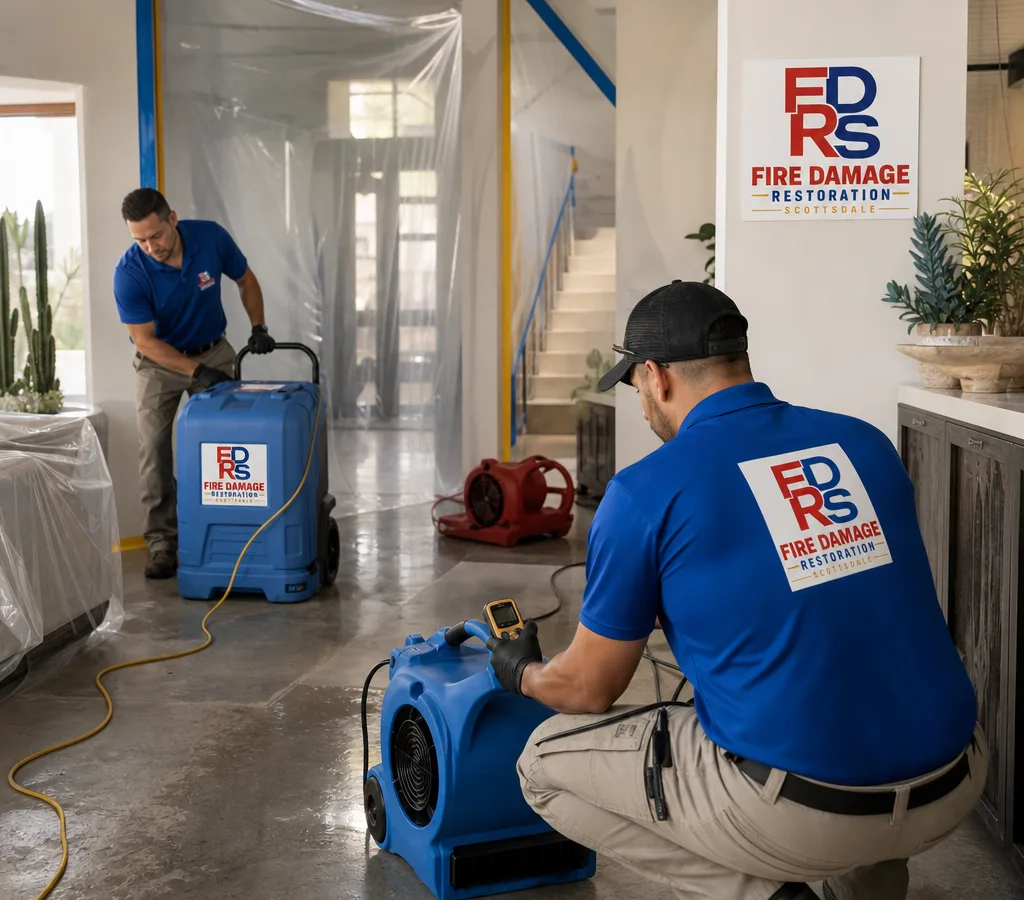
When water gets into walls, flooring, or cabinets, the clock matters. Scottsdale water damage restoration is less about pumping out visible water and more about stopping the loss, mapping moisture you cannot see, and drying materials to an industry dry standard so mold and swelling are less likely.
Fire Damage Restoration Scottsdale handles water damage restoration in Scottsdale, AZ for homes and small commercial spaces. We focus on practical steps that reduce disruption: isolate the wet area, protect unaffected rooms, document what we find, and build a drying plan based on what your materials can tolerate.
Common causes we respond to in Scottsdale include:
If you are dealing with an active leak, shut off the nearest fixture valve when possible. If the source is unclear, shutting off the main water supply is often the safest first move until the situation is assessed.
Drying hidden assemblies
Scottsdale homes often combine hard-surface finishes with layered assemblies: tile over underlayment, engineered wood, cabinets sitting on toe-kicks, and drywall with insulation. Water can travel along base plates, under floating floors, and behind vanities long before it shows on the surface.
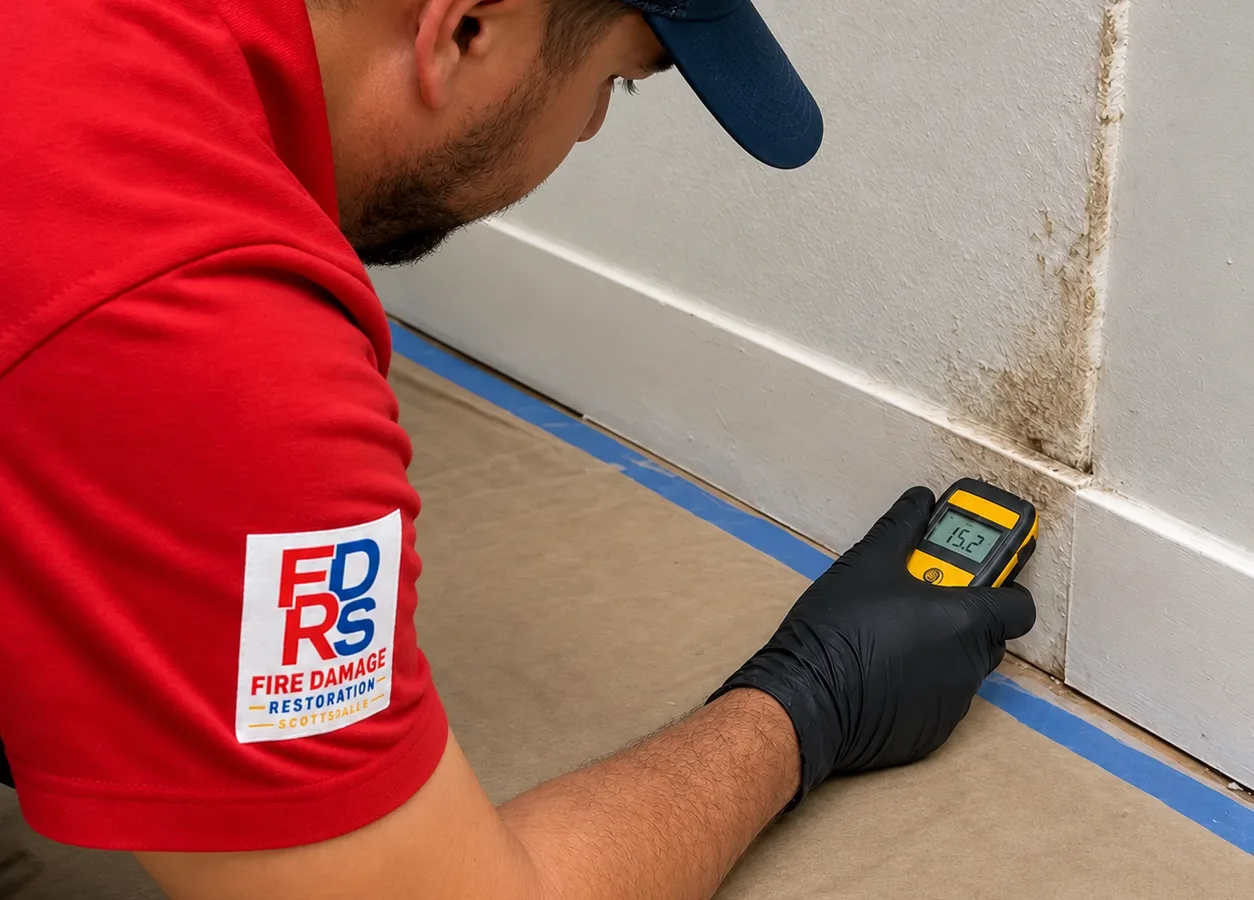
We start with a moisture inspection using non-invasive and penetrating meters, then confirm boundaries with targeted checks where needed. That lets us choose the least destructive approach that still dries correctly.
Neighborhood-by-neighborhood, the risk profile changes. In McCormick Ranch and other areas with mature landscaping and irrigation, slow leaks can stay hidden until flooring cups or cabinets swell. In North Scottsdale (85255), where larger homes and complex rooflines are common, storm intrusion can affect multiple rooms or ceilings at once. In Old Town and nearby condo-style buildings, shared walls and stacked plumbing can spread damage between units, so containment and documentation become even more important.
The goal is simple: remove what cannot be saved, dry what can, and prove dryness with readings before we close everything back up.
Accountable drying and cleanup
We define the affected area with moisture readings and explain what needs removal versus structural drying, so the work stays focused and accountable.
When removal is needed, we isolate the work area with plastic containment and manage negative air when appropriate to limit dust travel through the home.
Air movers and dehumidifiers are set up based on material type, room volume, and moisture load. Placement matters as much as horsepower.
Photos, readings, and daily notes support insurance communication and help avoid scope gaps between mitigation and repairs.
Drywall, insulation, cabinets, and flooring each behave differently. We choose methods that protect what is salvageable without trapping moisture.
Floor protection, careful furniture moves, and jobsite housekeeping reduce secondary damage and make it easier to live around the project.
From shutoff to verified dryness
Each phase protects unaffected areas, controls moisture, and documents progress before repairs begin.
We help confirm the source, recommend the right shutoffs, and identify immediate electrical or slip hazards. If there is standing water, extraction happens first.
We document affected materials and categorize the water based on contamination risk—clean, gray, or black water. That classification guides removal, cleaning, and PPE.
We set containment, remove damaged porous materials that cannot be dried safely—often insulation and sections of drywall—and protect cabinets, flooring, and contents.
Air movement and dehumidification are set to hit target humidity and drying conditions for the materials in place. We monitor progress and adjust equipment as needed.
We clean remaining surfaces, address odors if present, and verify dryness with moisture readings before repair work begins.
If reconstruction is required, we outline the next steps so you can plan around flooring, drywall, paint, cabinets, and trim. For restoration work beyond drying and cleanup, we explain how the repair phase will proceed.
Planning your restoration
Water damage restoration in Scottsdale typically ranges from about $900 to $6,500 for drying and cleanup, with larger losses running higher when multiple rooms, ceilings, or flooring assemblies are involved. A small, clean-water leak with limited removal may fall around $900 to $2,000, while a broader mitigation with demolition, antimicrobial cleaning, and several days of drying often lands around $2,500 to $6,500+.
Final price depends on the affected square footage, water category, how long materials were wet, access such as an attic or stacked units, what must be removed to dry correctly, and how many days equipment is required. Exact cost is confirmed after the on-site inspection and moisture mapping.
Request Emergency ServicePractical answers about water restoration
Start as soon as you can, ideally the same day, because wet drywall, insulation, and wood assemblies can begin swelling and breaking down quickly. In Scottsdale, even with a dry climate, moisture trapped under flooring or behind cabinets does not evaporate fast on its own, so a quick inspection and drying plan usually reduces the amount of removal needed.
Yes, we handle water damage restoration in Scottsdale, AZ for condos and townhomes, including shared-wall and stacked-plumbing situations. The key is documenting the moisture boundaries, using containment to keep dust out of common areas, and coordinating access and drying needs so neighboring units are not accidentally affected.
Clean water comes from a sanitary source like a supply line, while gray or black water can carry contaminants and usually requires more removal and detailed cleaning. The category changes the scope because porous materials that might be dried in a clean-water loss often need removal when contamination risk is present.
Not always, but removal is common when insulation is wet, when water has wicked above the base plate, or when the cavity cannot dry within a reasonable timeframe. We base that decision on moisture readings and how the wall is built, so the approach fits the structure rather than guessing.
Most drying projects take about 3 to 5 days, but the timeline depends on how long materials were wet, the type of flooring and wall assembly, and whether cabinets or insulation trapped moisture. We track progress with moisture readings and adjust equipment to keep the project moving.
Yes, we can provide photos, drying logs, and a clear scope so the adjuster can see what was affected and what work was required. That documentation helps separate mitigation work—drying, cleanup, and removal—from any reconstruction that follows.
Restoration often starts with mitigation—stopping water, extraction, drying, and cleaning—and repairs may follow depending on what had to be removed. We will spell out what is included in the initial scope and what would be handled as the repair phase so you can plan for drywall, paint, trim, and flooring decisions.
If you have wet drywall, warped flooring, or water that keeps returning, get an inspection before the damage spreads inside the assembly. A quick moisture map and a written plan make the next steps much clearer.
Call for Emergency HelpTell us what happened and what areas are affected. We will schedule a prompt inspection, explain what can be saved, and provide a clear scope for drying, cleanup, and any required removal.