
Contained work areas
We treat mold like a contamination problem. Isolation and negative air keep disturbance and dust controlled while work is underway.
Serving Scottsdale, Arizona & surrounding areas
24/7 Emergency Response
Mold remediation in Scottsdale
Stop mold at the source with a contained, standards-based cleanup plan. Our local team inspects, isolates, removes contaminated materials when needed, and verifies dry conditions so the problem does not come back.
✓Contained work areas
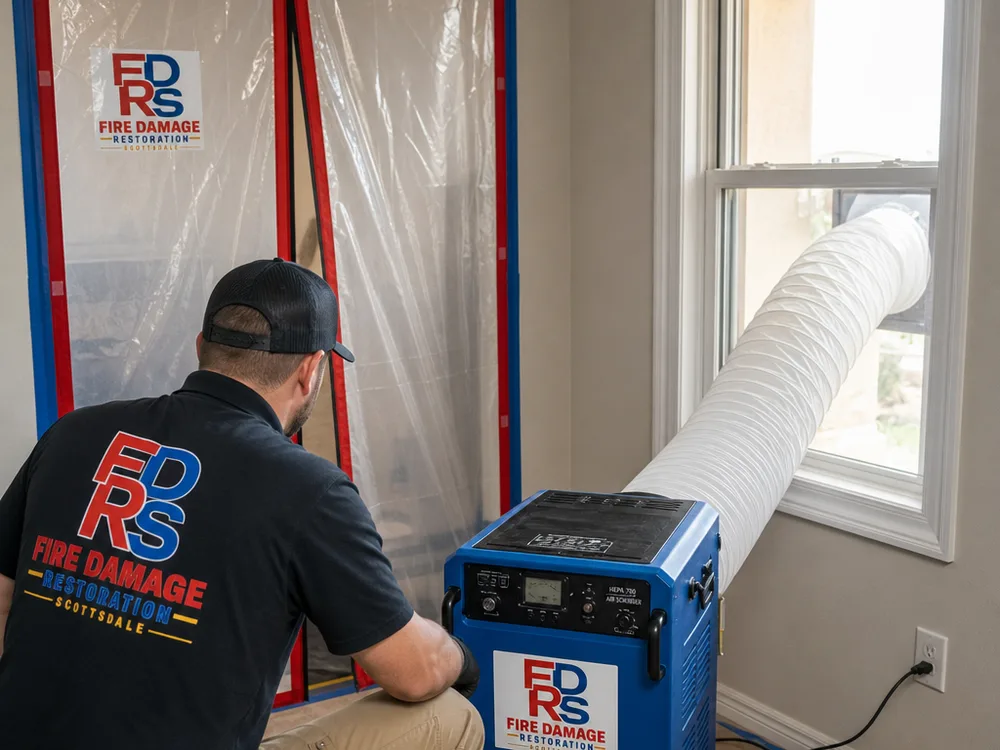
✓HEPA-filtered negative air
✓Written cleanup scope
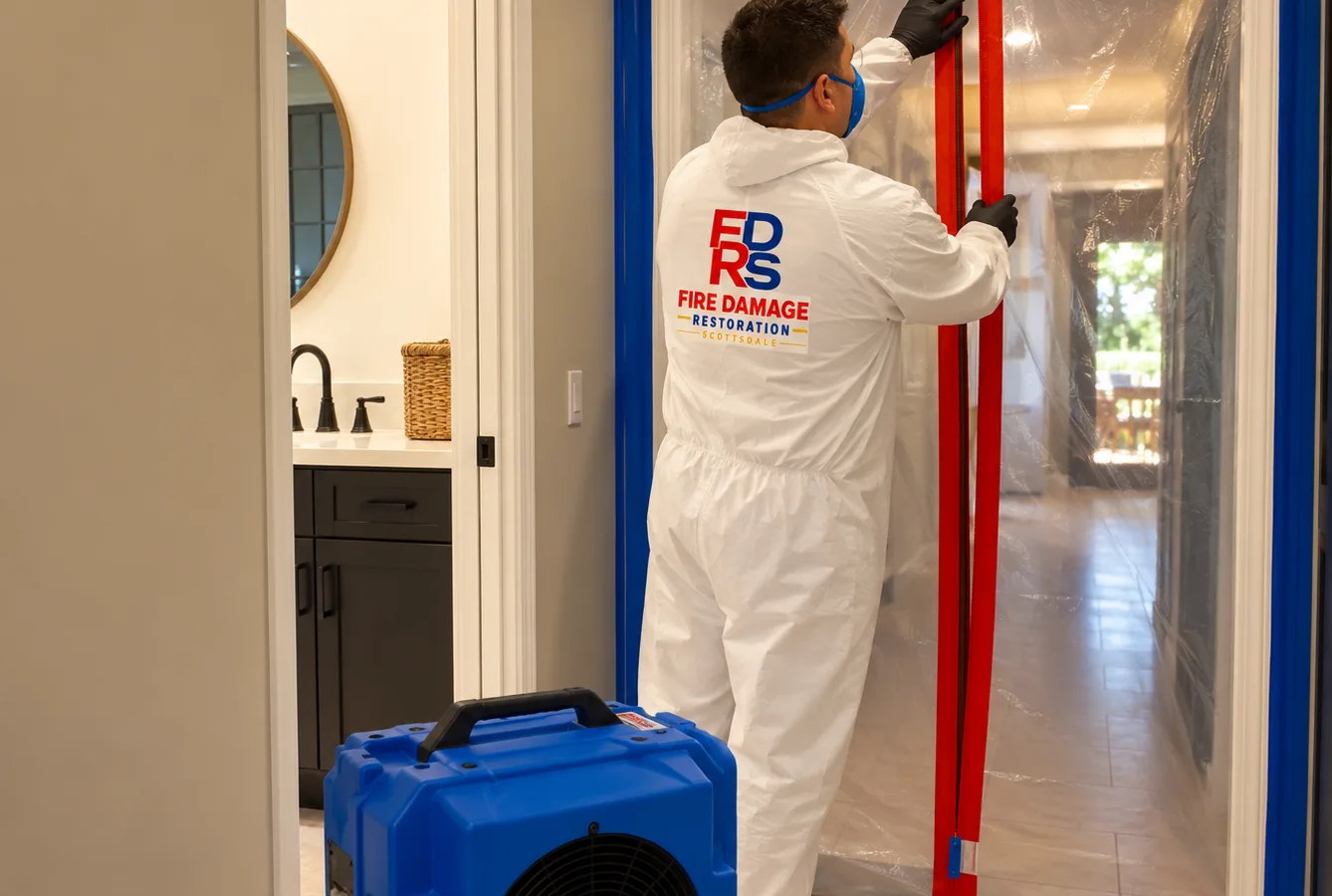
Act quickly, but methodically: contain the affected area, identify the moisture source, and use a written plan before disturbing contaminated materials.
Source-focused mold cleanup
If you are searching for mold remediation Scottsdale homeowners can trust, you are probably dealing with a musty odor, visible growth, or recent water damage that never fully dried. Mold spreads by airborne spores, and once moisture stays trapped behind drywall, under flooring, or in cabinetry, wiping the surface rarely solves it.
Fire Damage Restoration Scottsdale provides mold remediation in Scottsdale, AZ for homes and commercial spaces. Our work is built around containment, negative air, proper removal, and moisture control. That means we focus on the conditions that allowed mold to grow in the first place, then we clean and restore the affected areas in a way that protects the rest of the building.
In North Scottsdale and across ZIP 85255, we often find mold tied to slow leaks such as supply lines, faucet valves, and refrigerator lines, as well as HVAC condensate issues or past flooding that dried on the surface but stayed damp in wall cavities. The right next step is an inspection and written scope explaining what will be removed, what will be cleaned, how air will be controlled, and how dry targets will be confirmed.
Controlled remediation scope
A real mold remediation job is a controlled construction and cleaning project, not a spray-and-go visit. The details matter most in Scottsdale homes with finished drywall, tight interior closets, and built-in cabinetry where moisture can hide.
Typical Scottsdale projects include:
A professional scope should identify containment boundaries, materials to be removed, air-management methods, and the work needed after remediation. If a provider cannot explain containment and dry-condition verification, the proposed cleanup may be cosmetic rather than corrective.
Careful work, clear decisions
We treat mold like a contamination problem. Isolation and negative air keep disturbance and dust controlled while work is underway.
Mold is a symptom of moisture. We prioritize finding and addressing the damp conditions that caused growth so remediation holds.
You get a plain-English explanation of what is affected, what will be removed versus cleaned, and what needs to happen next.
We use HEPA vacuuming and thorough surface-cleaning steps so the space is ready for reconstruction or re-occupancy.
From a single room to an occupied workplace, we plan containment, access, and scheduling to minimize disruption.
Contained from start to finish
Each phase controls contamination and moisture before the next phase moves forward.
We start by identifying where moisture is present now or was present recently and how air may be moving between cavities. You will know what is affected and why.
Before work begins, we outline containment boundaries, equipment setup, and the materials likely to be removed. This keeps the job controlled and predictable.
We isolate the affected area and run HEPA-filtered negative air so the work zone stays controlled while materials are removed and cleaned.
Porous materials that cannot be reliably cleaned are removed. Remaining surfaces are cleaned and HEPA vacuumed with attention to corners, framing, and transitions.
We confirm the area is dry and stable and explain what comes next, whether that is minor repairs or larger rebuild work by the appropriate trade.
Planning your remediation
Mold remediation in Scottsdale typically ranges from about $1,000 to $3,500 for a small to moderate area, while larger or multi-room projects commonly run $4,000 to $10,000+ depending on removal and containment needs. A limited, single-room cleanup with minimal demolition is usually at the lower end, and jobs involving drywall removal, insulation replacement, or complex containment rise quickly.
Final pricing depends on the size of the affected area, how many materials must be removed, how hard the space is to access—such as attics or tight closets—the moisture source, and how much drying is required. The exact cost is confirmed after an on-site inspection and written scope.
Request Emergency ServiceScottsdale response area
Mold needs moisture, and in Scottsdale that moisture often comes from specific building conditions rather than long rainy seasons. What we see most often is water that stays hidden.
McCormick Ranch: Mature landscaping and irrigation near exterior walls can keep lower wall lines damp, allowing growth behind baseboards or drywall.
Old Town Scottsdale: Older plumbing and mixed-use buildings can experience repeated minor leaks that do not fully dry inside wall cavities.
North Scottsdale and ZIP 85255: Large homes with multiple HVAC zones can develop condensate drain clogs or attic moisture issues near ceiling penetrations.
No matter the neighborhood, the goal is the same: contain the work, remove what cannot be saved, clean what can, and confirm the moisture problem is resolved. Mold associated with a fire or suppression water should be addressed as part of an overall restoration and rebuild plan.
Practical answers about mold cleanup
Most mold remediation projects take 1 to 3 days of on-site work, but the full timeline depends on drying time and how much material has to be removed. A small, contained area with minimal demolition can often be completed quickly, while multi-room jobs may need additional days for removal, detailed cleaning, and moisture stabilization before repairs begin.
Sometimes, but only when affected materials are non-porous or growth is limited to the surface and the cavity behind it is dry. If drywall or insulation is contaminated, removal is usually appropriate because porous materials can retain spores and moisture. The decision should be based on what is wet or contaminated.
Often you can stay if the affected area can be fully contained and separated from living spaces. If the area is large, involves HVAC pathways, or affects bedrooms or primary living areas, a short relocation can be safer and less disruptive. We will outline what is reasonable after reviewing the layout and affected rooms.
Air testing can be useful in specific situations, but it does not replace an on-site moisture and building assessment. Remediation decisions should consider where moisture is present and which materials are affected. Testing should be interpreted alongside conditions found in cavities and on building materials.
If it is safe, stop the water source and avoid disturbing the area, since scraping or running fans through the room can spread spores. Keep doors to the affected room closed and note recent leaks, overflows, or HVAC issues. We will guide you on what to move or protect after confirming containment boundaries.
Coverage depends on the moisture source and your policy terms. Some claims are covered when mold results from a sudden covered water event, while long-term leaks are commonly excluded. Review your policy and document the source and timing of the water issue; a clear remediation scope can support your conversation with the carrier.
Tell us what you are seeing and where it is happening. We will schedule an on-site inspection, explain the containment and cleanup steps, and provide a written scope you can trust before any work starts.